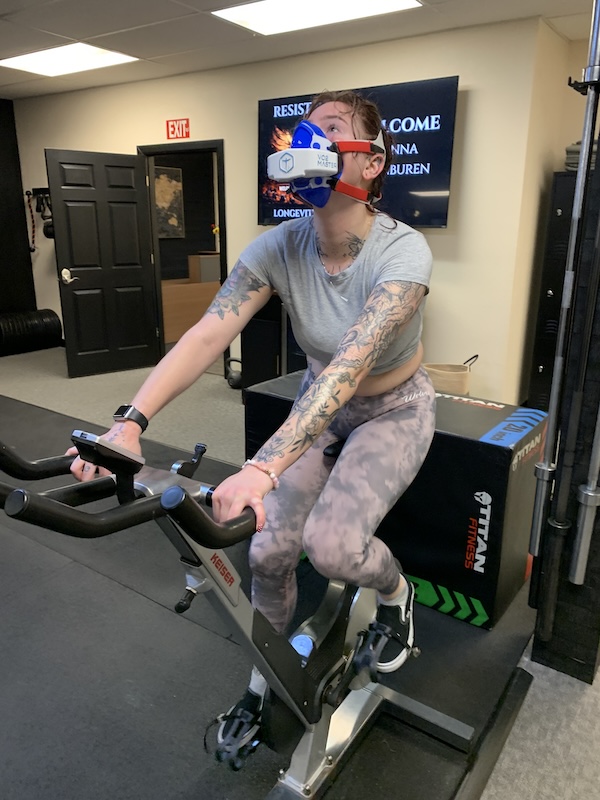
Zone 2 Fat Loss: Why VT1 Training Works Better Than “Hard Cardio”
Fat Loss Goal? Why you might want to slow down.
If fat loss was simply about burning the most calories in the shortest time, everyone would just do high-intensity workouts forever and walk around shredded. But you already know that’s not how real life works.
At Resist Rx, we’re big on one thing: results you can repeat. And for most people, the fastest way to get leaner isn’t “go harder.” It’s train smarter—and that usually starts with Zone 2 cardio at your VT1 (Ventilatory Threshold 1).
Let’s break down why.
The Big Myth: “Higher Intensity Burns More Calories, So It’s Better”
Yes—high-intensity cardio can burn more calories per minute.
But fat loss isn’t a 20-minute math problem.
Fat loss is a weekly and monthly outcome, and the best program is the one you can execute consistently without blowing up your recovery, appetite, sleep, or strength training.
That’s where Zone 2 wins.
What Is Zone 2 (and Why VT1 Matters)?
Zone 2 is a steady, sustainable pace where you can breathe harder but still stay in control—often described as:
“I can talk in short sentences.”
“I could hold this for a while.”
“This feels like work, but not suffering.”
VT1 is the point where your breathing starts to noticeably change—your body begins to rely more heavily on carbs as intensity rises. Training at or just under VT1 is a sweet spot for building aerobic capacity and improving fat oxidation.
In simple terms:
Zone 2 trains your engine. HIIT tests your engine.
6 Reasons Zone 2 Is Often Better for Fat Loss Than “Harder” Cardio
1) You Can Do More of It (and That’s the Game)
Hard workouts have a ceiling. You can’t go full-send every day and expect your body to smile about it.
Zone 2 is different:
You can do it more often
You can do it longer
You recover faster
You stay consistent
Weekly volume beats per-minute intensity. Every time.
2) Less “Rebound Hunger” (The Silent Fat-Loss Killer)
A lot of people do a brutal session… then get hit with:
cravings
increased appetite
“I earned this” eating
So the workout burns 400 calories, but dinner adds 800. That’s not fat loss—that’s cardio with a side of self-sabotage.
Zone 2 is typically more hunger-neutral, which makes it easier to maintain a calorie deficit without feeling like a starving raccoon at night.
3) It Protects Strength Training (and Muscle = Metabolism + Shape)
If you want fat loss and you want to look strong, lean, and athletic—strength training is non-negotiable.
Too much high-intensity cardio can:
crush leg recovery
reduce lifting performance
increase soreness
interfere with muscle-building signals
Zone 2 plays nicely with lifting, so you stay strong, preserve muscle, and keep your metabolism working for you.
4) It Builds Your “Fat-Burning Engine”
Zone 2 supports the adaptations that make your body better at using fat:
improved mitochondrial function (your “cell power plants”)
better oxygen delivery and circulation
improved aerobic efficiency
Here’s the kicker:
When you build a better aerobic base, you burn fat at higher intensities later.
Your body becomes more efficient—inside and outside the gym.
5) Lower Stress Load = Better Results
High intensity is great… until it becomes too much.
If someone is already stressed, under-slept, inflamed, or running on caffeine and willpower, adding more high-intensity training can:
raise cortisol load
disrupt sleep
elevate resting heart rate
lower HRV
increase water retention (hello, scale frustration)
Zone 2 is a more recovery-friendly way to create momentum while your nervous system stays on your side.
6) “Afterburn” Is Real… and Overhyped
HIIT can increase calories burned after training (EPOC), but in real-world numbers it’s often smaller than people think.
Meanwhile, a hard workout can quietly reduce NEAT (your daily movement):
you’re tired
you sit more
you move less the rest of the day
Zone 2 often has the opposite effect—you feel better, so you naturally move more.
And that’s a big deal.
The Resist Rx Truth
Zone 2 isn’t “better” because it burns more calories per minute.
It’s better because it helps you win the week.
Fat loss happens when you can stack:
consistent training
quality recovery
controlled appetite
strong lifting performance
sustainable weekly deficit
Zone 2 makes that possible for more people.
The Best Fat-Loss Combo (for Most Humans)
A simple winning setup looks like this:
Strength Training: 2–4 days/week
Zone 2 (VT1-based): 3–5 days/week, 30–60 minutes
High Intensity: 0–2 days/week (only if recovery is solid)
Want Your Exact Zone 2 Numbers?
At Resist Rx, we don’t guess your zones—we test them.
Your VT1-based Zone 2 target is different than your friend’s, different than a chart online, and different than a smartwatch estimate.
If you want the exact heart rate and workload where your body is optimized for fat oxidation and aerobic improvement:
Book a VO₂ + FatMax assessment.
We’ll show you your real zones and build a plan you can actually sustain.
Welcome to the resistance.
